Exile and Identity: José Martí’s Life Beyond Cuba
Discover how José Martí's years of exile in Spain, Mexico, Guatemala, Venezuela, and the United States broadened his worldview and strengthened his commitment to Cuban independence, unity, and nationhood.
Instituto Folklórico Cubano Americano
11/15/20264 min read

Exile and Identity: José Martí’s Life Beyond Cuba
How years away from his homeland strengthened Martí’s dedication to Cuban independence
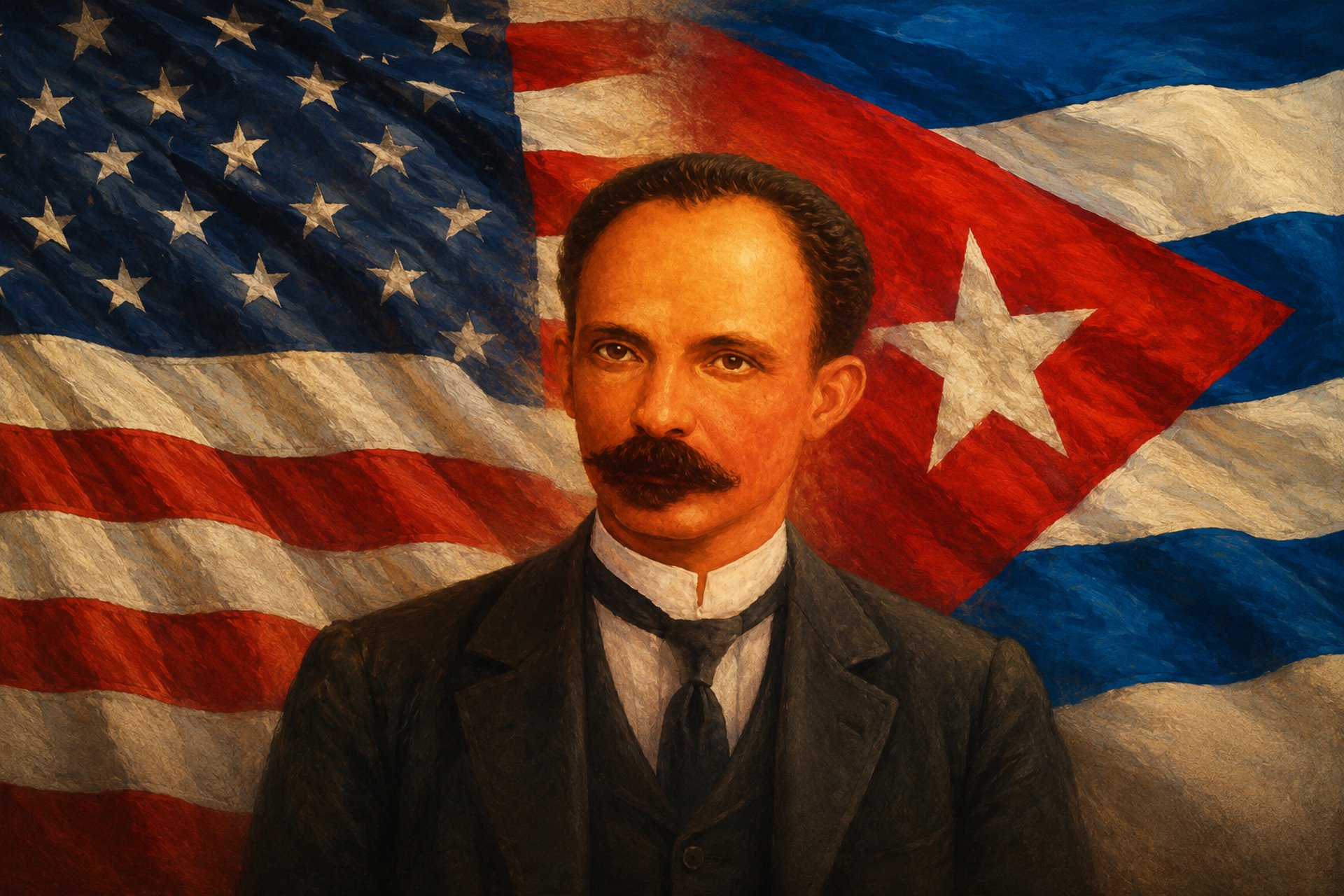
For José Martí, exile was more than geographical separation from Cuba. During much of his adult life, living beyond the island became an experience that shaped his political thought, literature, and understanding of Cuban identity. The more he encountered other countries and societies, the more deeply he considered what kind of nation Cuba might eventually become.
From imprisonment to first exile
Martí's commitment to the Cuban cause began while he was still a teenager during the opening years of the Ten Years' War. After his arrest and sentence to forced labor, he was sent to Spain in 1871, beginning the prolonged exile that would characterize much of his life. There he published El presidio político en Cuba, denouncing the prison conditions he had experienced, while continuing his university education in Madrid and Zaragoza.
Spain allowed him to observe directly the society and political system of the colonial power governing his homeland. Martí studied, wrote, and participated intellectually in the debates of his time, yet distance did not weaken his emotional relationship with Cuba. Instead, separation made his homeland an increasingly constant presence in his thinking.
A life among nations
After Spain, Martí returned to the Americas and lived at different times in Mexico and Guatemala, while also spending time elsewhere in Latin America. Each society offered new perspectives on education, culture, inequality, and the political difficulties confronting the continent's young nations. These experiences helped broaden his outlook from an exclusively Cuban concern toward a wider understanding of Latin America.
Exile therefore became a continental education as well as a personal condition. Martí came to see that Latin American peoples shared historical challenges while possessing cultures and possibilities that needed to be understood on their own terms. This perspective would eventually find one of its most powerful expressions in his celebrated essay Nuestra América.
New York and the Cuban community
From 1881 until his final return to Cuba in 1895, Martí spent much of his life in New York City. He worked intensively as a journalist for Latin American publications while observing the industrial energy, politics, and social contradictions of the United States. He admired aspects of American society but also expressed concern about U.S. expansionism and its possible consequences for Cuba and Latin America.
New York also became one of the principal centers of his independence activities. Among Cuban emigrants, Martí encountered a community that preserved memories, customs, family concerns, and hopes connected to the island. Living beyond Cuba had not erased their Cuban identity; for many, distance had intensified the desire to preserve it.
Tampa, Key West, and a homeland in exile
Martí understood that independence would require support from Cuban communities beyond New York. He traveled to places such as Tampa and Key West, where Cuban cigar workers became important supporters of the revolutionary movement. His speeches helped unite people from different social experiences around a shared vision of an independent Cuba.
These communities demonstrate how Cuban culture continued to live beyond the island's physical borders. In cigar factories, clubs, homes, and associations, emigrants shared news, music, literature, memories, and political debates concerning their homeland. Exile therefore produced spaces where cultural identity and political aspiration could reinforce one another.
Organizing from a distance
In 1892, Martí played the central role in establishing the Cuban Revolutionary Party to organize a renewed struggle for independence. His project sought to learn from divisions that had weakened earlier efforts and to bring different sectors together around a common purpose. The organization drew upon revolutionary clubs in several communities, demonstrating how deeply the Cuban diaspora had become involved in the independence movement.
Martí also insisted that achieving independence would not be enough if the new nation reproduced injustice or fell under another form of domination. He envisioned a republic built with civilian institutions and a republican spirit, while worrying about both military authoritarianism and possible foreign annexation. From exile, he was therefore thinking not only about freeing Cuba, but about what should happen after freedom was achieved.
The distance that strengthened belonging
Martí's experience reveals an apparent paradox: he spent much of his life away from Cuba, yet that distance deepened his understanding of what belonging to Cuba meant. Spain, Mexico, Guatemala, Venezuela, and especially the United States expanded his intellectual horizons without erasing his connection to the land of his birth. Exile transformed nostalgia into study, observation into thought, and ultimately thought into organization.
When Martí returned to Cuba in 1895, he was no longer the teenager who had been deported decades earlier. He returned after encountering different societies, building networks among emigrants, and spending years imagining a nation that did not yet fully exist. In José Martí's life, exile did not diminish Cuban identity; it became one of the places where that identity acquired a deeper and more universal meaning.
#CubanFolklore #JoseMarti #CubanExile #CubanIdentity #CubanHistory #CubanCulture #CubanIndependence #NuestraAmerica #NewYork #Tampa #KeyWest #InstitutoFolkloricoCubanoAmericano #FolkloreCubanoOrg