José Martí and the Power of the Written Word
Discover how José Martí transformed poetry, essays, letters, and journalism into instruments of education, reflection, and change, leaving a written legacy that remains essential to Cuban and Latin American culture.
Instituto Folklórico Cubano Americano
10/25/20263 min read

José Martí and the Power of the Written Word
How poetry, essays, letters, and journalism became Martí's tools for transformation
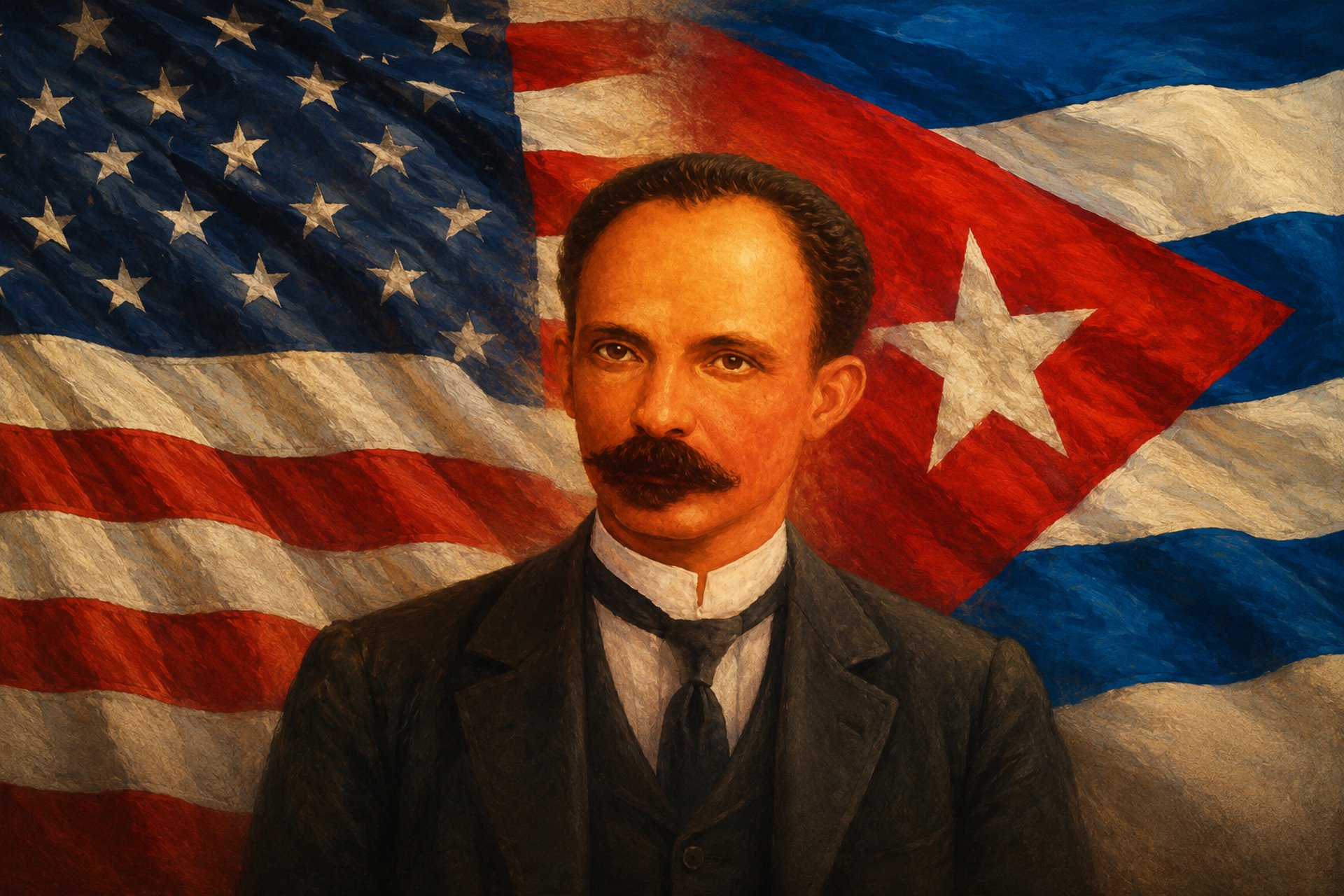
For José Martí, writing was never simply a literary exercise. From an early age, he understood that a page could denounce injustice, educate a child, defend an idea, or awaken the conscience of thousands of readers. Throughout his life, the written word became one of his most powerful instruments, joining literature, moral reflection, and his commitment to Cuba and the Americas.
A calling that appeared early
Martí began publishing while still a teenager amid the tensions surrounding the beginning of Cuba's Ten Years' War. In 1869 he participated in publications including La Patria Libre, revealing early in life that writing and engagement with the realities around him were inseparable activities. Following imprisonment and deportation to Spain, he again turned to writing to describe and denounce the prison conditions he had experienced.
Those experiences helped establish a characteristic that would remain throughout his work: Martí wrote from experience but continually sought broader human principles. A text might begin with a particular circumstance and lead his reader toward questions of justice, freedom, dignity, or responsibility. Literature therefore became both a means of understanding the world and an attempt to improve it.
The poet behind the thinker
Martí's public life existed alongside a deeply personal poetic voice. In collections including Ismaelillo and later Versos Sencillos, he explored love, friendship, nature, suffering, virtue, and his own interior contradictions. Versos Sencillos, published in 1891, demonstrated how apparently simple language could contain remarkable emotional and philosophical intensity.
His poetry reminds us that Martí cannot be understood solely through his political activities. Behind the organizer and journalist was a writer extraordinarily sensitive to trees, flowers, children, friendship, and the small experiences of everyday life. His ability to unite personal sensitivity with universal reflection helps explain the enduring power of his writing.
A journalist of the Americas
During his years in New York, Martí developed an extraordinary journalistic career and contributed to Latin American newspapers including La Nación of Buenos Aires. From the United States he observed politics, industry, art, technology, and the social transformations of a nation he admired in some respects and criticized in others. His chronicles allowed Latin American readers to encounter that society through an observer who sought to understand it without abandoning a distinctly American perspective.
Martí's journalism reveals the remarkable breadth of his intellectual curiosity. He could write about public figures, political events, literature, or technological change, yet continually searched for what those developments meant for human beings. For Martí, journalism was not simply the reporting of facts; it was also an invitation to interpret them and think.
Writing to build a community
In 1892 Martí founded the newspaper Patria in New York, with its first issue appearing on March 14 of that year. Its pages were closely connected with the Cuban independence movement and provided a means of communicating ideas, organizing support, and strengthening a common sense of purpose among Cuban communities outside the island. Patria offers one of the clearest examples of Martí using journalism as an active part of a historical project.
His conception of writing, however, extended beyond immediate political objectives. Martí understood that any future society would require educated citizens capable of independent thought and recognition of the dignity of others. Education, culture, responsibility, and human values consequently appear again and again throughout his writings.
Words that also belonged to children
One of the most beautiful expressions of Martí's educational calling was La Edad de Oro, the children's magazine he published in 1889. Martí did not treat young readers as incapable of understanding important ideas, but wrote for them about history, art, science, literature, and human values with respect and imagination. The publication reveals his conviction that building better societies also began by giving children knowledge, beauty, and intellectual dignity.
This dimension of Martí is essential because it reveals the remarkable breadth of his understanding of the written word. He wrote for adults deeply involved in the events of their time, but he also wrote for children who represented the future. In both cases, he trusted the reader's capacity to learn, reflect, and grow.
A body of writing that survived the man
When Martí died in Cuba in 1895, he left much more than political speeches or memorable poetry. He left letters, articles, essays, chronicles, poems, and educational writings through which different dimensions of the same remarkable mind can still be encountered. His legacy demonstrates how the written word can simultaneously become personal memory, artistic creation, educational instrument, and expression of civic responsibility.
More than a century later, Martí continues to be read because many of the questions he explored remain with us: how to live with dignity, how to educate, how to understand other cultures, and how to build more just societies. His power came not simply from writing beautifully, but from treating writing as a responsibility. For Martí, words mattered because words could become thought, and thought could become action.
#CubanFolklore #JoseMarti #CubanLiterature #VersosSencillos #LaEdadDeOro #Patria #CubanHistory #CubanCulture #Marti #InstitutoFolkloricoCubanoAmericano #FolkloreCubanoOrg