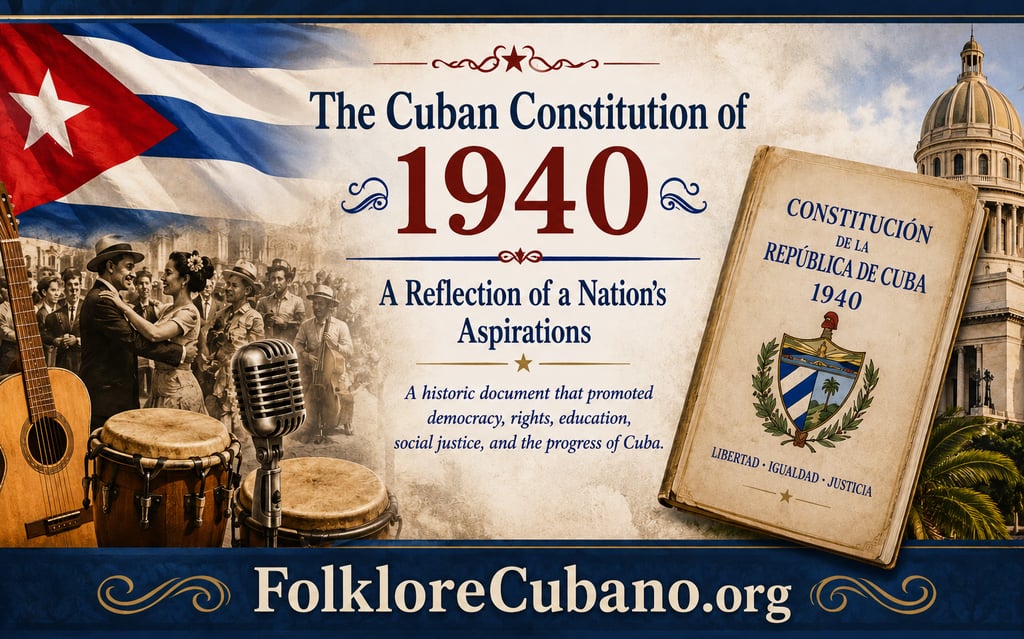
The Cuban Constitution of 1940: A Reflection of a Nation's Aspirations
Explore the significance of Cuba's 1940 Constitution and learn how one of the most progressive constitutions of its era reflected the values, aspirations, and cultural identity of the Cuban people.
Instituto Folklórico Cubano Americano
6/7/20263 min read
The Cuban Constitution of 1940: A Reflection of a Nation's Aspirations
Understanding the historic document that helped shape modern Cuban society
When discussing Cuban history, most people immediately think of music, dance, literature, architecture, and national heroes such as José Martí. Yet behind every nation's cultural development stands a legal and social framework that influences daily life. One of the most important documents in Cuba's republican history was the Constitution of 1940, a landmark charter that reflected the hopes and aspirations of the Cuban people during the first half of the twentieth century.
Adopted on July 1, 1940, the Constitution emerged after decades of political change and national growth. It was drafted by representatives from various political viewpoints and sought to establish a modern democratic republic based on individual rights, social justice, education, and national sovereignty. At the time, many observers considered it one of the most advanced constitutions in the world.
One of its most notable features was its commitment to equality before the law. The Constitution prohibited discrimination based on race, social status, or sex and recognized the political rights of women. It also guaranteed freedom of speech, freedom of religion, freedom of the press, and the right of citizens to participate in democratic elections.
The document also introduced important labor protections that reflected the changing social realities of the era. It supported fair wages, the eight-hour workday, paid vacations, workers' rights to organize, and social security protections. These provisions demonstrated a growing belief that government should play a role in protecting the welfare of working families.
Education occupied an important place within the Constitution. The framers recognized education as essential to the progress of the nation and supported free public education. The promotion of science, literature, music, and the arts was viewed as a public good that would strengthen Cuban society and preserve the nation's cultural heritage.
For students of Cuban folklore and culture, the Constitution offers an interesting historical perspective. The same decades that saw the flourishing of son, danzón, rumba, teatro bufo, décima poetry, and other expressions of Cuban identity were also years in which citizens debated questions of democracy, education, labor, and national development. Culture does not exist in isolation; it grows within the broader social environment of a nation.
Although the Constitution of 1940 was eventually replaced following the political changes that occurred after 1959, it remains an important historical document. Historians continue to study it as a reflection of the ideals, challenges, and ambitions of the Cuban Republic during a pivotal period in the island's history.
Today, the Constitution of 1940 serves as a valuable reminder that a nation's heritage is shaped not only by its music, dances, traditions, and folklore, but also by the ideas and institutions that its people create in pursuit of a better future.
Why It Matters to Students of Cuban Folklore
Understanding the historical context of Cuba helps us better appreciate the cultural traditions that developed during the Republic. The music, dances, literature, and customs that form part of Cuba's folklore did not emerge in a vacuum. They evolved within a society that was continually defining its identity, values, and vision for the future. Studying documents such as the Constitution of 1940 allows us to better understand the world in which many of Cuba's most beloved cultural traditions flourished.
#CubanHistory #Cuba #CubanFolklore #InstitutoFolkloricoCubanoAmericano #CubanCulture #HistoryOfCuba #CubanHeritage #JoseMarti #CulturalHeritage #FolkloreStudies #CubanRepublic #LatinAmericanHistory