Tumba Francesa - A Living Memory of French-Haitian Cuba
Discover Tumba Francesa, a powerful Cuban folkloric tradition born from French-Haitian migration, blending African drumming, French courtly dance, song, memory, and Cuban cultural creativity.
Instituto Folklórico Cubano Americano
7/19/20264 min read
Tumba Francesa - A Living Memory of French-Haitian Cuba
Exploring the elegant, powerful tradition that blends African rhythm, French courtly dance, and Cuban creativity.
A Tradition Born from Migration and Memory
Tumba Francesa is one of Cuba’s most beautiful examples of cultural survival. Its name may be translated as “French drum,” but the tradition is much more than music. It is a living expression of history, identity, dance, language, ceremony, and community memory.
This tradition came to eastern Cuba after the upheavals in Saint-Domingue, present-day Haiti, during the late 18th and early 19th centuries. French colonists, free people of color, and enslaved Africans of Haitian background arrived in Cuba’s Oriente region, especially around Santiago de Cuba, Guantánamo, and nearby coffee-growing areas. With them came memories of African rhythm, French social dance, Haitian Creole culture, and the painful experience of displacement. Over time, these elements were reshaped in Cuba into what became known as Tumba Francesa. UNESCO describes it as one of the oldest and most tangible links to Cuba’s Afro-Haitian heritage in Oriente. (ICH UNESCO)
Where Africa, France, Haiti, and Cuba Meet
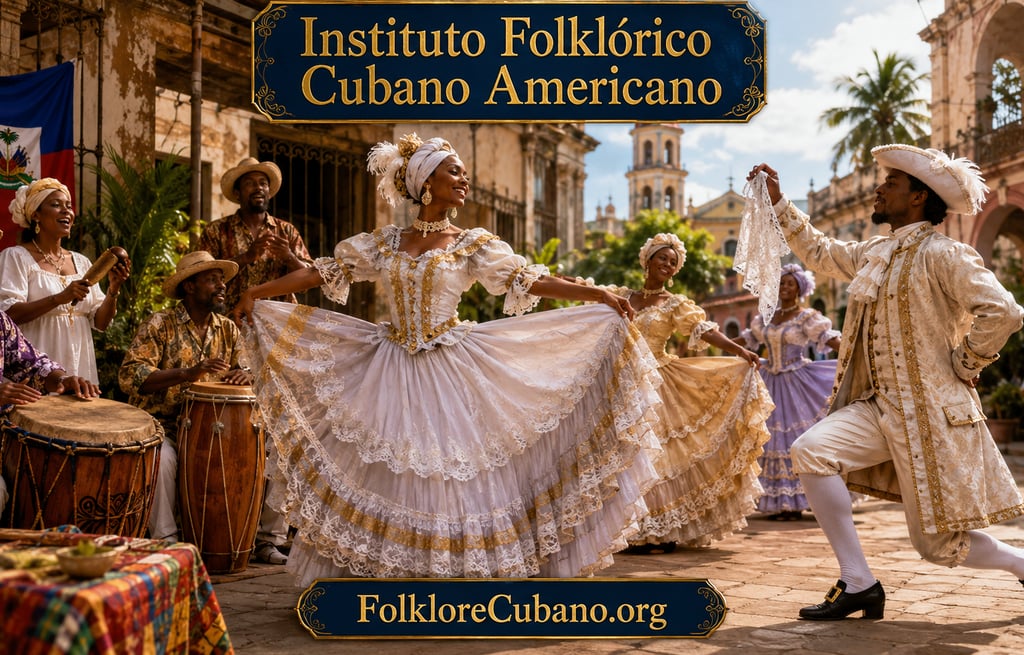
Tumba Francesa is a remarkable cultural blend. From Africa came the drum language, call-and-response singing, rhythmic power, and communal participation. From French courtly culture came the influence of elegant social dances, formal figures, and graceful body posture. From Haiti came Creole language, memory, and spiritual-cultural continuity. From Cuba came the new soil where all of these traditions adapted, survived, and became part of the island’s folklore.
This is why Tumba Francesa should not be seen as a borrowed tradition, but as a transcultural Cuban creation. It represents how communities carried memory through the body, the drum, the voice, and the gathering space. Even under hardship, people preserved dignity, beauty, discipline, and joy.
The Music: Drum, Song, and Response
At the heart of Tumba Francesa is percussion. The drums are not simply accompaniment; they guide the dancers, shape the ceremony, and speak with authority. Traditional performances include drums, the catá, and other percussion instruments, along with singing that often uses call-and-response patterns. The lead singer may begin with improvised verses, answered by a chorus, creating a conversation between individual expression and collective memory.
This structure reflects one of the strongest African inheritances in Cuban folklore: the idea that music is communal. The people do not merely watch; they respond, move, sing, and participate. In Tumba Francesa, sound becomes a bridge between generations.
The Dance: Elegance with Power
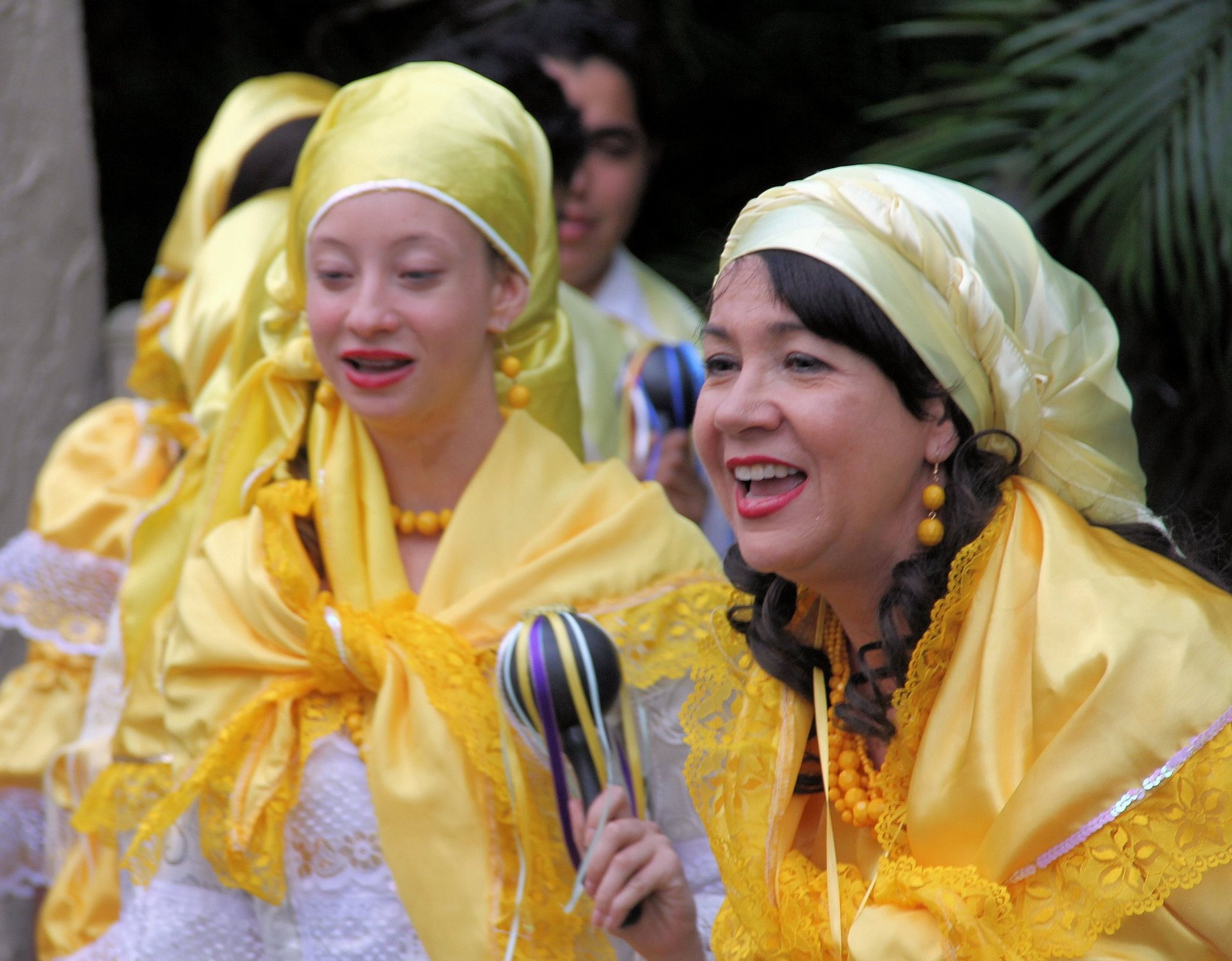
The dance of Tumba Francesa is visually striking because it combines refinement and strength. Dancers may carry themselves with upright posture, formal gestures, and graceful patterns that recall French salon and courtly dances. Yet beneath that elegance is the deep rhythmic force of African-derived movement.
This contrast is what makes Tumba Francesa so powerful. It is both dignified and energetic, controlled and expressive, ceremonial and joyful. The dancers do not simply perform steps; they embody history. Their movement tells the story of people who adapted European forms without losing African identity.
Societies, Cabildos, and Community Life
Tumba Francesa survived because it lived inside organized communities. These societies functioned as cultural homes where music, dance, leadership, memory, and mutual support could continue. In this way, Tumba Francesa connects with the broader history of Afro-Cuban cabildos and mutual aid societies, where African-descended communities preserved traditions while adapting to Cuban life.
These organizations helped transform folklore into an institution of survival. They gave people a place to gather, teach younger generations, honor elders, celebrate feast days, maintain costumes and instruments, and protect the dignity of the tradition.
A Heritage Still Alive
Tumba Francesa is not only a relic of the past. It is still practiced and honored as part of Cuba’s living cultural heritage. UNESCO inscribed La Tumba Francesa on the Representative List of the Intangible Cultural Heritage of Humanity in 2008, recognizing its importance as a tradition of dance, song, drumming, and cultural memory. (ICH UNESCO)
Its survival reminds us that folklore is not frozen history. Folklore lives when people continue to perform it, teach it, protect it, and give it meaning. Tumba Francesa remains a living archive of French-Haitian Cuba, a tradition where memory is not kept only in books, but in rhythm, footsteps, voices, costumes, drums, and community pride.
Why Tumba Francesa Matters
To study Tumba Francesa is to understand one of the deepest truths of Cuban folklore: Cuban culture was formed through encounter. It was shaped by pain and resilience, but also by creativity, adaptation, and beauty. Tumba Francesa shows how people can carry their heritage across borders and transform it into something new without forgetting where it came from.
In its drums we hear Africa. In its gestures we see France. In its language and memory we feel Haiti. In its survival we recognize Cuba.
Related Hashtags:
#TumbaFrancesa #FolkloreCubano #CulturaCubana #AfroCubanCulture #CubanFolklore #CubanDance #CubanMusic #FrenchHaitianCuba #HaitianHeritage #OrienteCuba #SantiagoDeCuba #Guantanamo #IntangibleCulturalHeritage #UNESCOHeritage #AfroCaribbeanCulture